Diagnostic Service
See Every Defect Before You Spend A Dollar
HD sewer camera inspection gives you footage-backed evidence of exactly what is wrong, where it is, and what it means — before any repair decision is made.
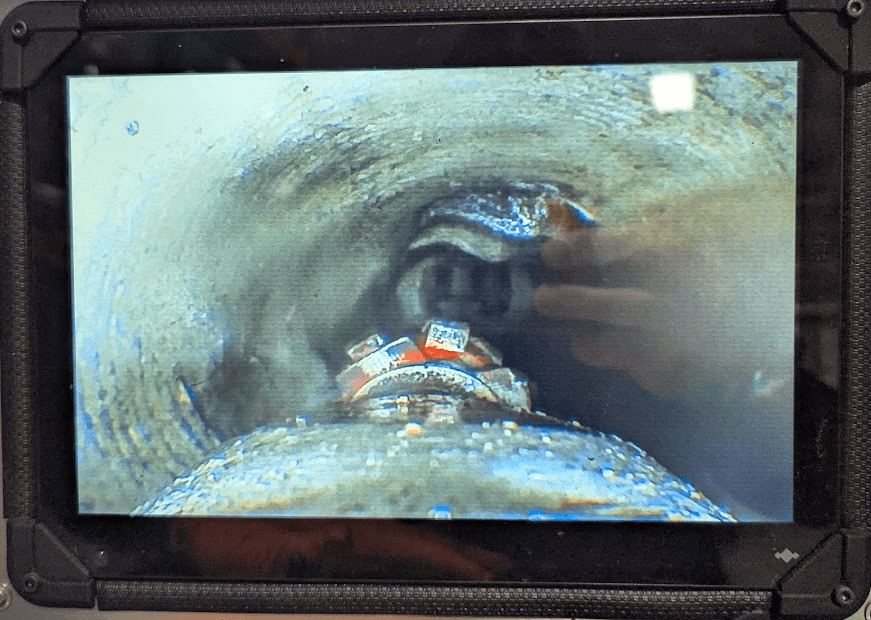
Field documentation | HD camera footage mid-inspection pass
0%
Evidence-backed recommendations
0-day
Typical inspection turnaround
0K+
Lines inspected across the region
0 guesswork
Decisions made without footage
Defect Catalog
Six Things Camera Inspection Catches That Nothing Else Can
Every item below shows up in our footage before it turns into an emergency callout or a failed repair.
Root Intrusion
Tree and shrub roots enter pipe joints and cracks. We map exact entry points so clearing or relining targets the right sections.
Pipe Collapses and Deformation
Settled soil and aging pipe materials create partial collapses. Camera evidence tells us if spot repair or full relining is the right call.
Grease and Scale Buildup
FOG (fats, oils, grease) and mineral scale narrow flow channels incrementally. We catch it before it becomes an emergency.
Offset and Misaligned Joints
Ground movement causes pipe sections to shift. Offsets allow infiltration, root entry, and solid waste hang-up that creates recurring blockages.
Cracks and Fractures
Hairline fractures and full longitudinal cracks invite groundwater infiltration and root growth. Camera footage confirms extent before repair scoping.
Belly and Negative Grade Sections
Low spots in the pipe run hold solid waste and liquids. These sections require specific remediation strategies and are impossible to locate without visual evidence.
Inspection Workflow
From Access Point To Written Report In One Visit
Access and Equipment Setup
We access the line through an existing cleanout or temporarily open one. Camera head and cable are readied for the run.
- Cleanout location confirmed or created
- Cable length and camera head matched to pipe diameter
- Real-time monitor connected for on-site review
Active Camera Pass
The camera traverses the full run, recording HD footage with timestamp and depth markers at each defect location.
- Continuous HD footage captured end-to-end
- Defect locations marked by distance from access
- Camera head orientation confirmed at each finding
Defect Log and Findings Review
We review footage on-site with you, highlight each defect, and explain exactly what it means for the pipe's performance.
- Timestamped defect list by location
- Severity rating for each finding
- Plain-language explanation of every item
Written Recommendation
You leave with a clear written recommendation and footage reference, organized by repair path so decisions are easy to compare.
- Repair path options ranked by priority
- Footage timestamps for each recommendation
- Fast handoff into relining or targeted repair scopes
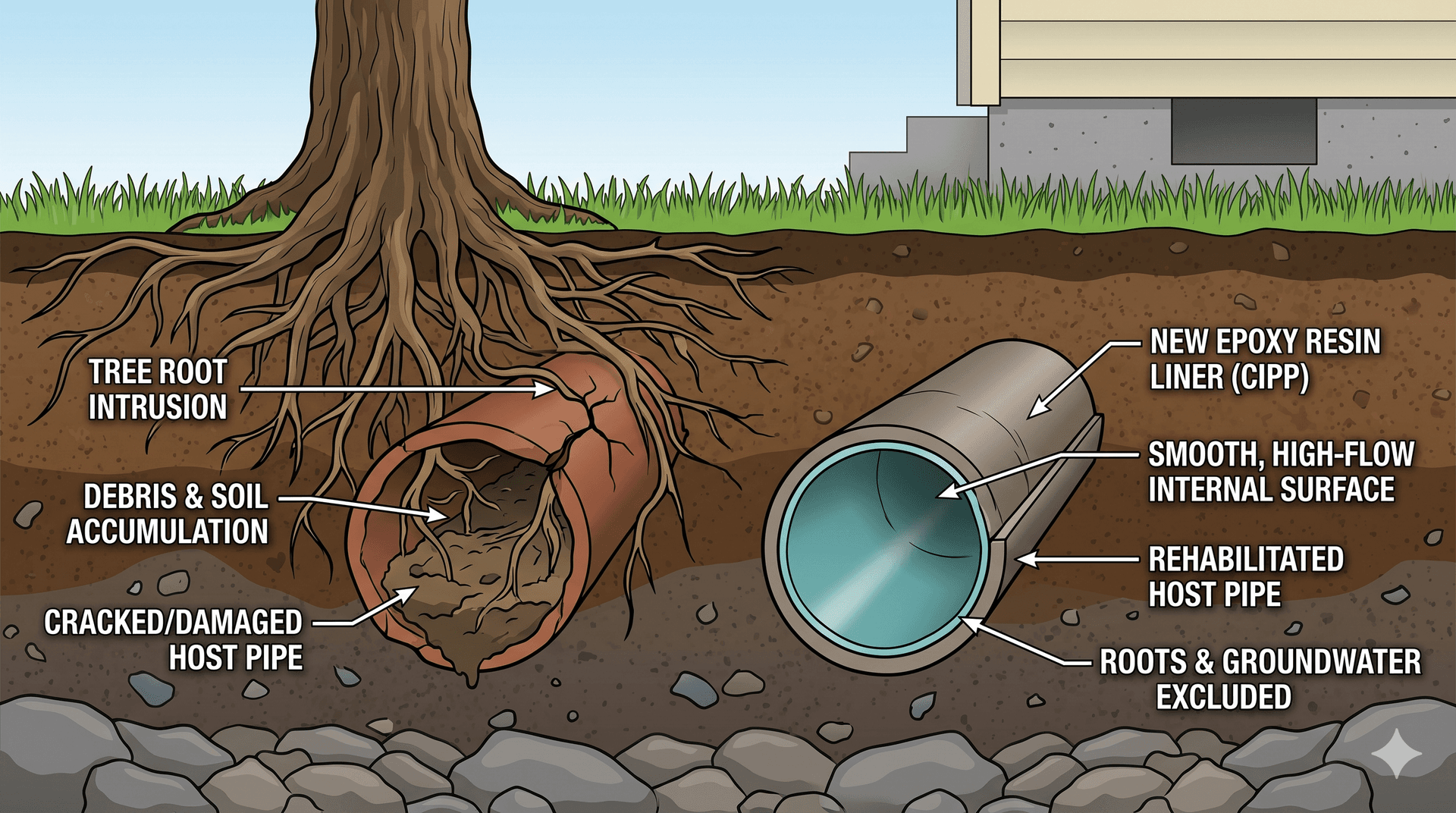
What The Camera Shows You
Root intrusion looks like this before relining
This is what a line looks like before cleaning and liner prep. Without camera confirmation, these root clusters are invisible from the surface. Every relining scope we write starts with footage exactly like this.
Inspection evidence also tells us what sections can carry a CIPP liner and which may require a spot dig first. That decision cannot be made from a symptom.
Why It Matters
Six Ways Inspection Pays For Itself
No assumptions about failure cause
Every recommendation comes from footage, not inference. You know the source before any money is spent on repairs.
Pre-purchase and pre-renovation clarity
Identify pipe conditions before they become your liability. We inspect before property purchases and major renovation scopes.
Save on incorrect repair decisions
Knowing the exact defect prevents over-scoping. Targeted repairs cost far less than a full pipe replacement driven by guesswork.
Paired directly with relining
Inspection and CIPP relining run on the same workflow. When relining is indicated, we move into liner planning without rebooking.
Clear documentation for owners and strata
Video footage and written reports satisfy body corporate requirements and give building managers a maintenance record.
Stops recurring blockages at the source
When a drain keeps blocking and clearing doesn't hold, camera inspection finds the structural reason in one visit.
Common Questions
What Owners Ask Before Booking
How long does a sewer camera inspection take?
Do I get a copy of the footage?
What if the camera finds a serious problem?
Can you inspect any pipe material?
Is inspection required before relining?
Book A Camera Inspection
Tell us what you are experiencing and we will confirm access requirements, scope the run, and get you footage and a written recommendation in one visit.